Published By BHF | August 9, 2026
St. Jude Primary School, Naigobya Village, Luuka District, Uganda
By: Tatumwa Desmond Benjamin | Busoga Health Forum | desmondbenja@gmail.com
| AT A GLANCE More than 300 community members reached • General medical consultations • Malaria screening • Laboratory services • Emergency preparedness support • Community health education and referral linkages |
Health at the Heart of a Wider Community Celebration
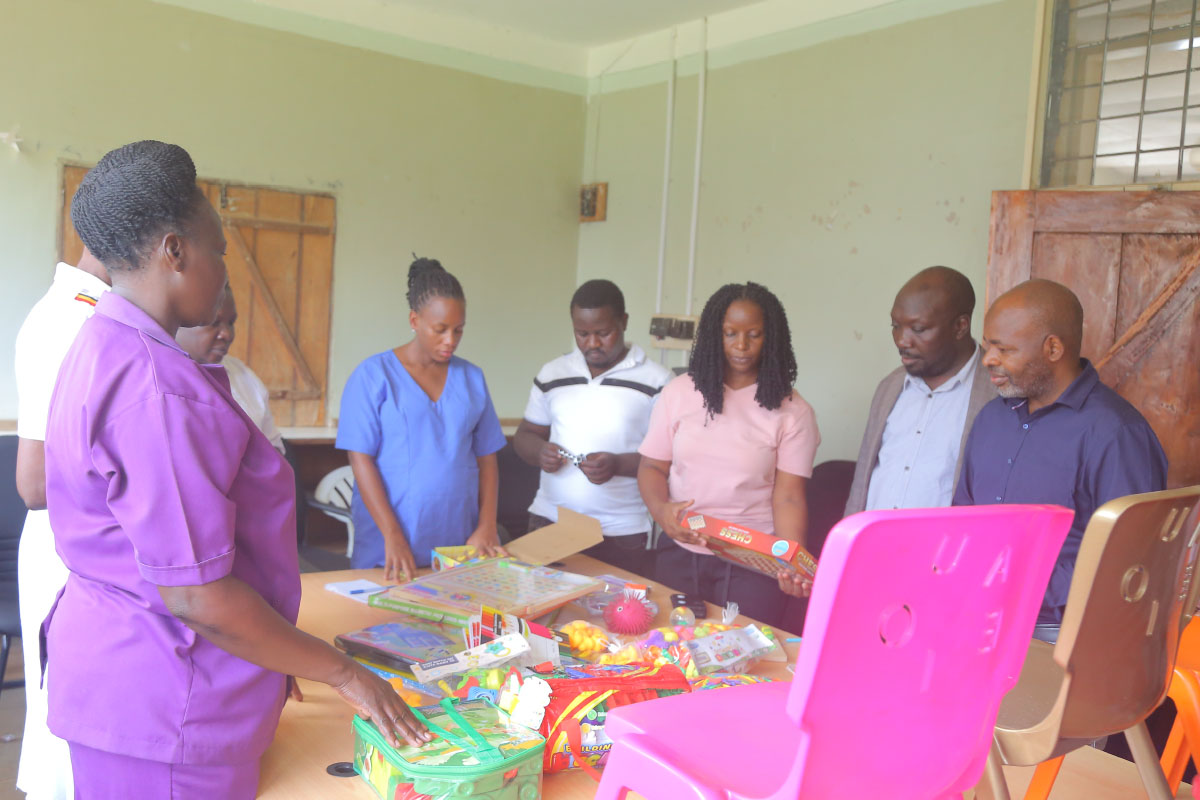
When the community of Naigobya gathered at St. Jude Primary School for the commissioning and handover of a new classroom block, the day became more than an education milestone. It also became an opportunity to bring essential health services closer to families who might otherwise have to travel, wait or postpone care.
The event was organised by the Rotary Club of Kyadondo and One Village at a Time (OVAAT). Busoga Health Forum led the medical camp in partnership with Hope and Healing Center-Kiwanyi, the Luuka District Health Department and local health facilities. Together, the teams provided general consultations, screening for common conditions including malaria, laboratory services, health information and referral support. More than 300 community members benefited from the outreach.
For BHF, the medical camp reflected a core principle of community health: access improves when services move closer to people, especially when public, private-not-for-profit and community partners work as one team.
Why Malaria Screening Still Matters
Malaria remains a major community health concern in many parts of eastern Uganda. BHF has been learning from the Busoga Malaria Eradication Program that malaria control cannot depend only on waiting for sick children and adults to present at health facilities. Community-based screening creates opportunities to identify infections earlier, provide appropriate treatment or referral, reinforce prevention messages and connect households to the formal health system.
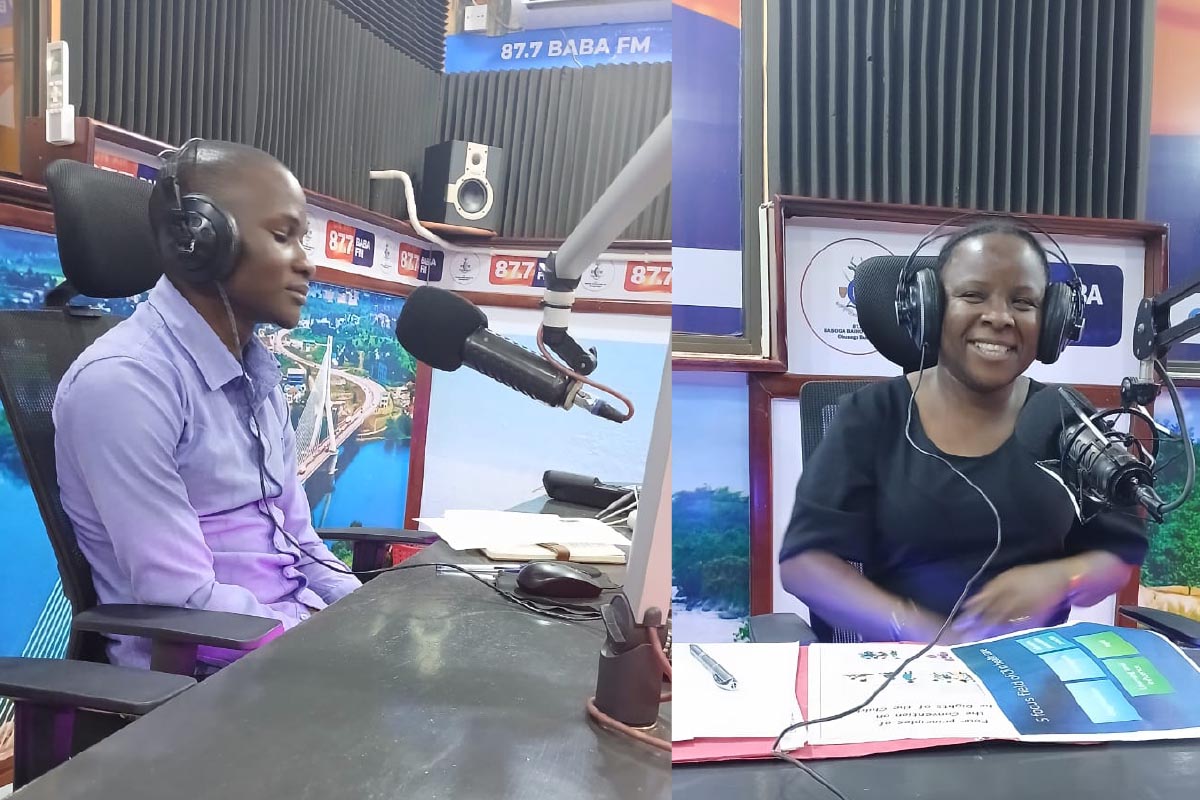
| MOSES KYANGWA – EXECUTIVE DIRECTOR, BUSOGA HEALTH FORUM Kyangwa emphasised that improving community health requires taking prevention and early detection seriously. Drawing on lessons from BHF’s malaria work in Busoga, he noted that children may carry malaria parasites before families recognise the need for care. Bringing screening closer to communities can identify infection earlier, support timely management and strengthen the broader goal of reducing malaria transmission. |
The Naigobya outreach therefore treated malaria screening not as a stand-alone activity, but as part of a broader package of community health services. The model combines early detection, clinical assessment, laboratory support, counselling and pathways for continued care – all important elements of people-centred primary health care.
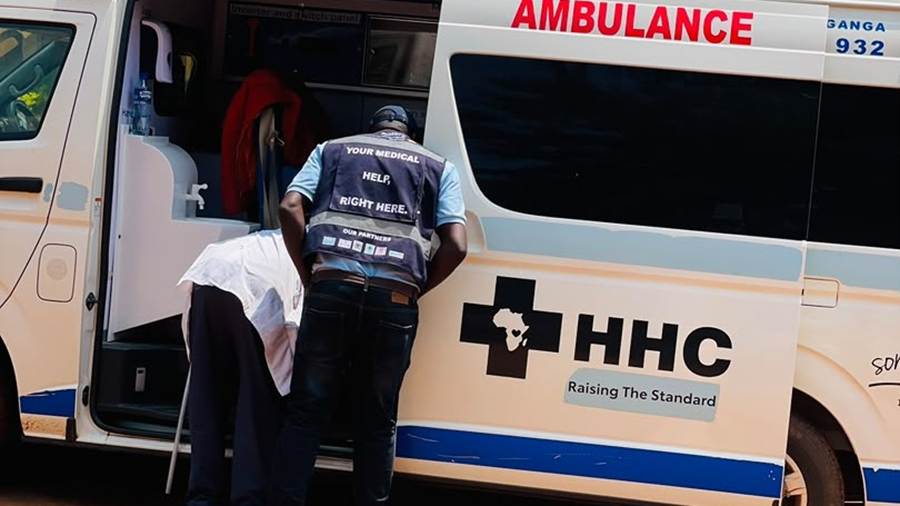
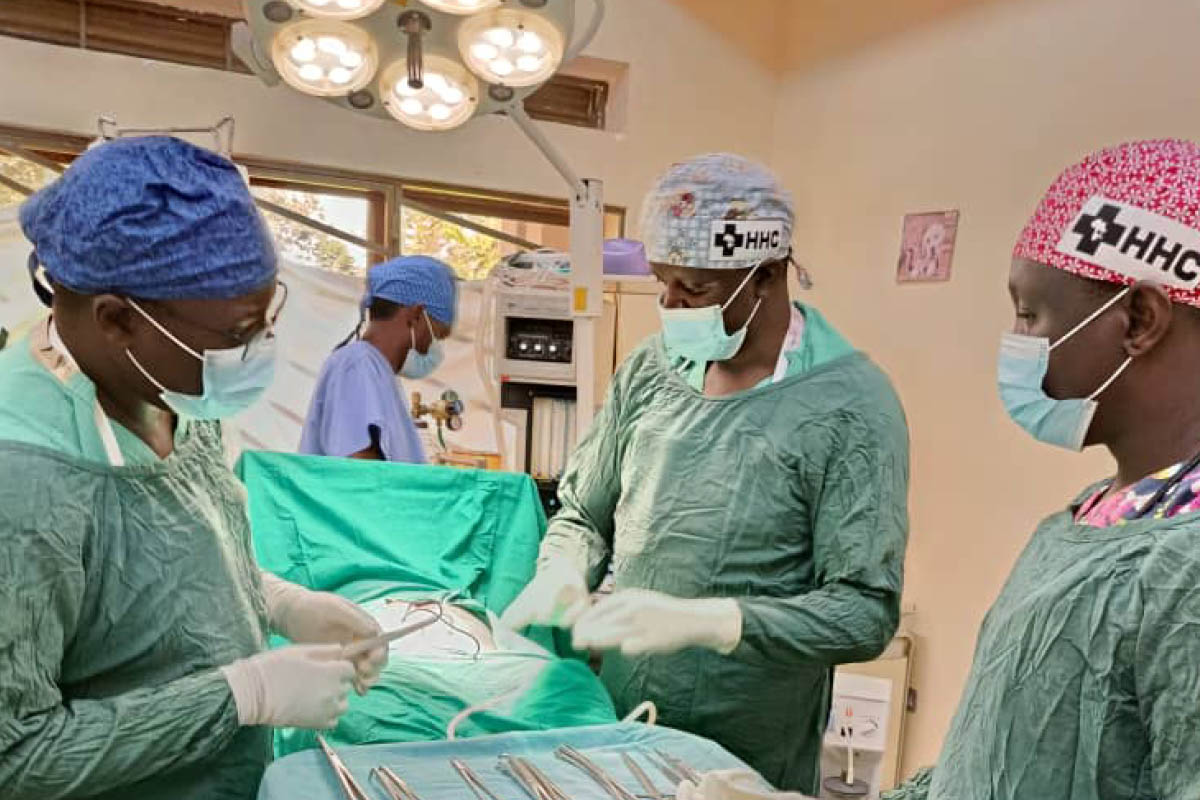
Hope and Healing Center-Kiwanyi supported the outreach with clinical personnel and mobile health capacity, working alongside BHF, Luuka District Health Department and local health facilities.
Addressing the Three Delays by Bringing Services Closer
Dr. Isaac Mubezi, who led the Hope and Healing Center-Kiwanyi team, framed the outreach through the familiar “three delays” lens: the delay in deciding to seek care, the delay in reaching appropriate care, and the delay in receiving appropriate care after arrival. While the framework is widely known from maternal and emergency care, it also offers a useful way of understanding why people with common illnesses can reach health services late.
| DR. ISAAC MUBEZI – HOPE AND HEALING CENTER-KIWANYI Dr. Mubezi highlighted that well-organised community medical camps can help reduce these delays by making services visible, affordable and physically closer to families. People can be assessed before illness becomes severe, travel barriers are reduced, and a multidisciplinary team with consultation and diagnostic capacity can begin care or arrange referral more quickly. |
The value of an outreach is therefore not only in the number of patients seen on a single day. It is also in the opportunity to identify people who have delayed care, recognise conditions that need follow-up, strengthen trust in local health services and refer patients who require further assessment or treatment.
Strengthening First Aid and Emergency Preparedness
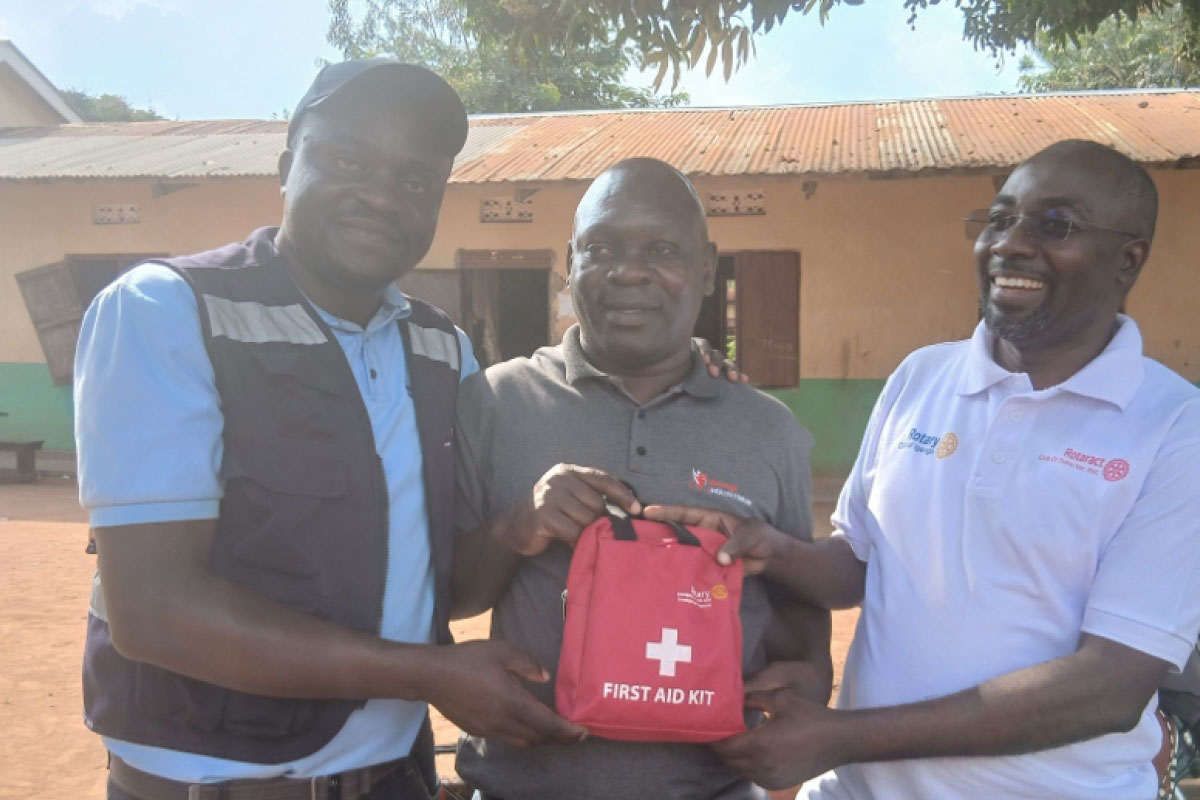
During the activity, BHF also received a first aid kit from the Rotary Club of Kampala First Aid and Emergency Response. The kit was received by BHF Executive Director Moses Kyangwa as part of the wider partnership around community health and emergency readiness.
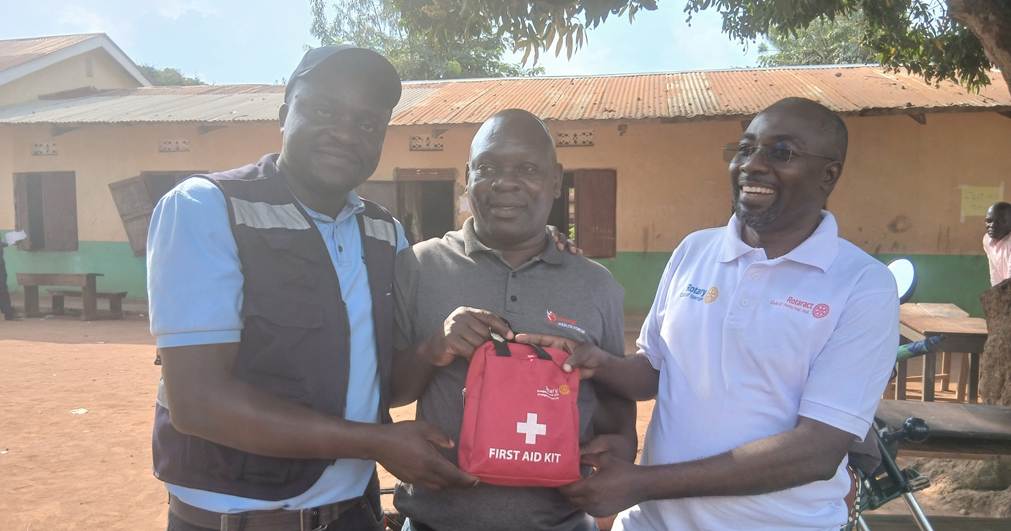
Busoga Health Forum Executive Director Moses Kyangwa receives a first aid kit from the Rotary Club of Kampala First Aid and Emergency Response during the Naigobya community outreach.
First aid capacity is an important part of community resilience. Immediate, appropriate action in the minutes after an injury or sudden illness can stabilise a patient while referral and definitive care are organised. For organisations working regularly in schools, villages and public gatherings, having basic first aid supplies available also supports safer community programming.
Children at St. Jude Primary School were central to a day that connected health, education and hope for the future. | Rotary and Rotaract partners planted more than 200 trees, adding environmental stewardship to the wider community action. |
Health, Education and Community Participation in One Place
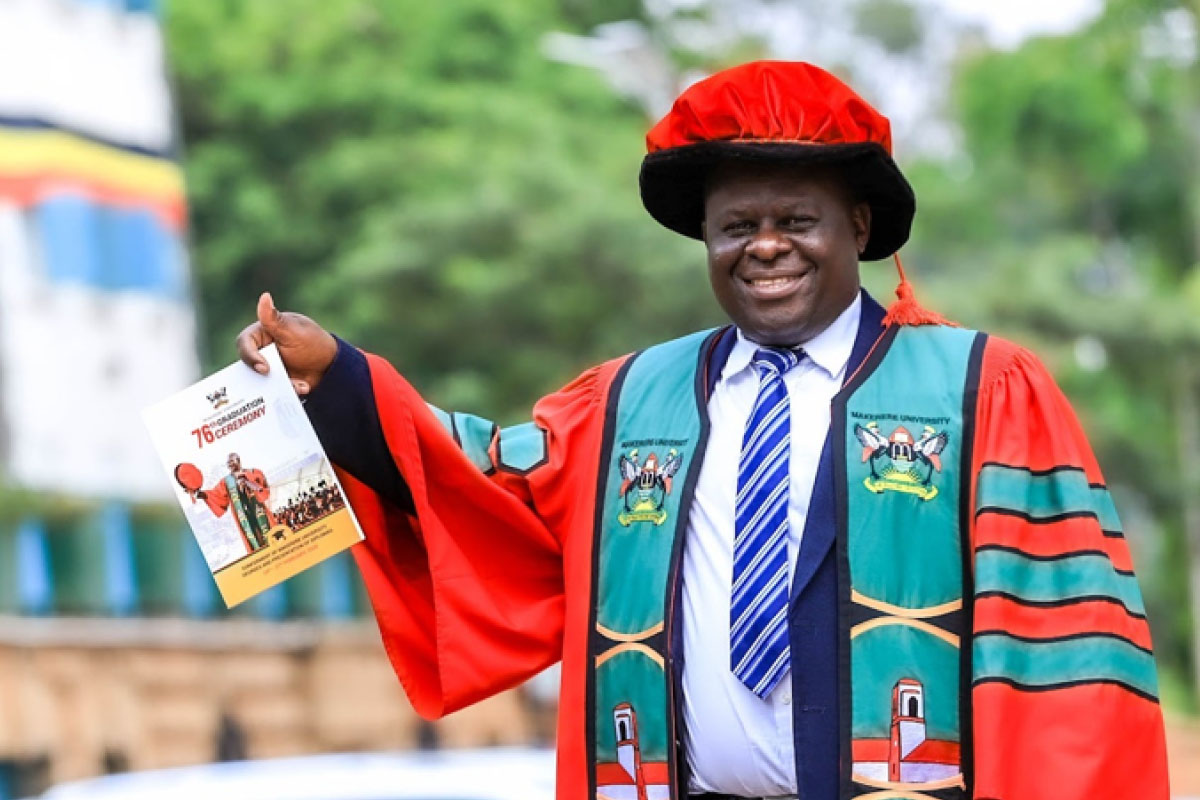
The medical camp took place alongside the commissioning of the classroom block at St. Jude Primary School. The Rotary Club of Iganga and Rotaract Club of Iganga joined the event and planted more than 200 trees, while participants also painted the donated building, played football with community members and organised face painting and other activities for children.
These activities created a setting in which health was not separated from education or community life. A child who is healthy is better positioned to learn. A family that can access timely care is better able to support children in school. A school that becomes a centre for health information, environmental stewardship and community participation can contribute to wellbeing far beyond the classroom walls.
Partnership as a Model for Community Health
The Naigobya outreach demonstrated what can happen when organisations contribute different strengths to a shared community goal. BHF provided coordination and community-health leadership for the medical camp. Hope and Healing Center-Kiwanyi contributed clinical expertise and service capacity. Luuka District Health Department and local health facilities strengthened linkage to the public health system. Rotary and OVAAT created the platform through a major investment in education, while additional Rotary partners supported environmental action and emergency preparedness.
For BHF, this kind of collaboration is especially important because many of the barriers that affect health are not purely medical. Distance, information gaps, cost, trust, delayed care-seeking and weak linkages between communities and facilities all shape health outcomes. Integrated outreach can help identify those barriers while creating a practical bridge between households and existing services.
From a One-Day Camp to Longer-Term Impact
A medical camp is most useful when it strengthens what happens after the event. The people screened in Naigobya may need follow-up, prevention support, treatment completion or referral. The relationships built with local facilities and district health teams can help ensure that community members know where to seek care next and that serious conditions are not lost after initial screening.
The same principle applies to malaria. Screening is valuable when it is linked to appropriate case management, prevention, household awareness and continued surveillance. BHF’s experience through the Busoga Malaria Eradication Program continues to reinforce the importance of finding infections early, engaging communities and combining facility-based care with proactive community action.
| THE BIGGER MESSAGE More than 300 people receiving services is an important achievement. The longer-term opportunity is even greater: earlier care-seeking, stronger malaria awareness, better referral linkages, improved emergency readiness and a community that sees health services as accessible and responsive. |
A Healthier Village Creates More Opportunities
The new classroom at St. Jude Primary School symbolises opportunity for the children of Naigobya. The medical outreach added another essential part of that promise: children and families need good health to make full use of educational opportunity.
By bringing screening, consultation and diagnostic services closer to the community, BHF and its partners helped make health care more immediate and visible. By connecting those services to district structures, local facilities and continued malaria work, the outreach also pointed toward a model that can extend beyond a single event.
For Busoga Health Forum, that is the value of community partnership: meeting people where they are today while building stronger pathways to healthier futures.
| BUSOGA HEALTH FORUM | Always Caring, Always Here, Because your life Matters |